


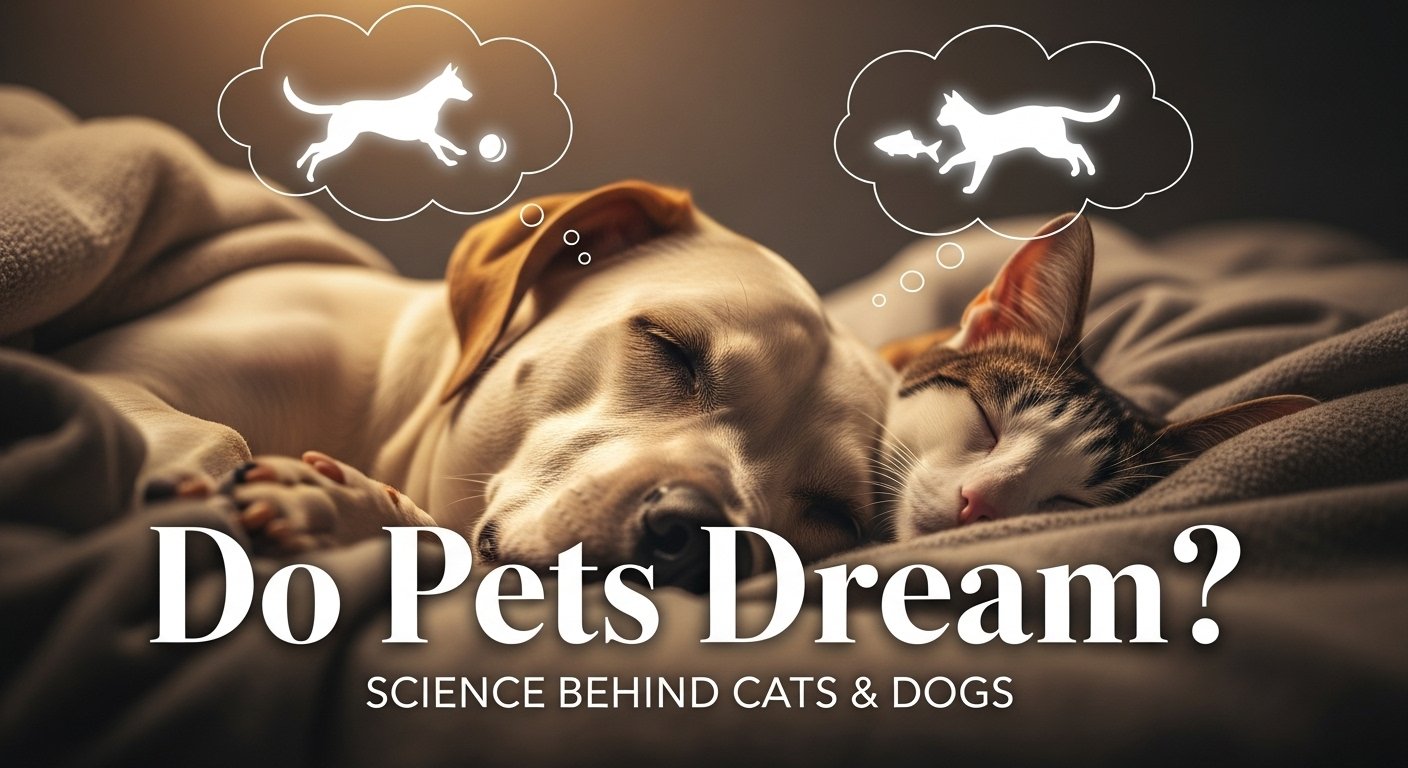
Do Pets Dream? What Science Says About Cats and Dogs
If you’ve ever watched your dog twitch, bark softly, or “run” in their sleep or your cat meow, flick their whiskers, or paddle their paws you’ve probably wondered: Are they dreaming?
The answer, according to science, is a resounding yes. Both cats and dogs experience dreams, and researchers have uncovered fascinating details about what goes on in their furry brains while they snooze.
Let’s dive into the science of pet dreams what cats and dogs dream about, how their sleep cycles compare to humans, and what those adorable sleep twitches really mean.
The Science of Sleep in Pets
Like humans, pets go through several sleep stages:
- Light Sleep (NREM stage 1 & 2) → Relaxed but easily awakened.
- Deep Sleep (NREM stage 3) → Muscles fully relaxed, body heals and restores energy.
- REM Sleep (Rapid Eye Movement) → Brain is highly active, dreams occur here.
Dogs and cats both spend significant time in REM sleep, which is why scientists believe they dream just like us.

Do Dogs Dream?
Yes, dogs dream. Harvard psychologist Dr. Deirdre Barrett explains that dogs likely dream about day-to-day experiences their owners, favorite activities, and familiar places.
Signs Your Dog Is Dreaming:
- Paws moving as if running
- Twitching or wagging tail
- Whimpering, barking, or soft growling
- Rapid eye movement under closed lids
Puppies and senior dogs dream more often, possibly because they process more new information or revisit memories.

Do Cats Dream?
Cats also dream, though their patterns differ slightly. Cats spend nearly half their day sleeping (12–16 hours), giving them plenty of dream time.
Signs Your Cat Is Dreaming:
- Whisker twitching
- Paws batting in the air
- Ears flicking
- Soft meowing or chirping
- Tail swishing
Research suggests cats often dream about hunting behaviors, like stalking prey, pouncing, and playing.

What Do Pets Dream About?
While we can’t ask them directly, studies suggest:
- Dogs dream about their owners, walks, food, and playtime.
- Cats dream about hunting, chasing toys, or interactions with other cats.
Essentially, pets dream about the same things they experience when awake.

The Research Behind Pet Dreams
One groundbreaking study in the 1960s monitored cats with electrodes during sleep. When researchers temporarily disabled muscle paralysis during REM, cats began acting out their dreams pouncing, stalking, and swatting imaginary prey.
Similarly, research on dogs has shown their brain activity during REM sleep closely mirrors human dream patterns.
Conclusion: pets not only dream, but their dreams are vivid and behavior-based.

Why Do Pets Twitch, Bark, or Meow in Sleep?
These nighttime actions are physical signs of dreaming. During REM sleep, the brain sends signals that would normally cause muscle movement but a safety mechanism (sleep paralysis) stops full-body action.
Small twitches and noises slip through, giving us adorable glimpses into their dream world.
Do Pets Have Nightmares?
Yes, pets can also experience nightmares.
Nightmares may be linked to stressful events, past trauma (especially in rescue pets), or strong emotions.
Comfort them gently if they wake frightened, but avoid shaking or startling them.
How Much Do Pets Dream?
- Dogs: Spend about 10–12% of sleep in REM. Small dogs tend to dream more frequently than large breeds.
- Cats: Spend about 20–25% of sleep in REM, so they dream more often than dogs.
No wonder your cat seems to chase invisible mice in their sleep more frequently than your pup!

How to Help Your Pet Sleep Better
Quality sleep = better health and happier pets. Here’s how you can help:
- Provide a supportive bed (orthopedic for seniors).
- Keep a consistent sleep schedule.
- Exercise daily so they’re ready to rest at night.
- Create a quiet, cozy sleep space away from loud noises.
- Use calming aids (pheromone diffusers for cats, weighted blankets for dogs).
Final Thoughts
So, do pets dream? Absolutely. Cats and dogs not only dream, but their dreams reflect their daily lives whether it’s chasing a toy mouse, running through the park, or spending time with their favorite human.
Next time you see your dog’s paws twitching or your cat softly chirping in their sleep, smile. You’re watching a window into their dream world.
